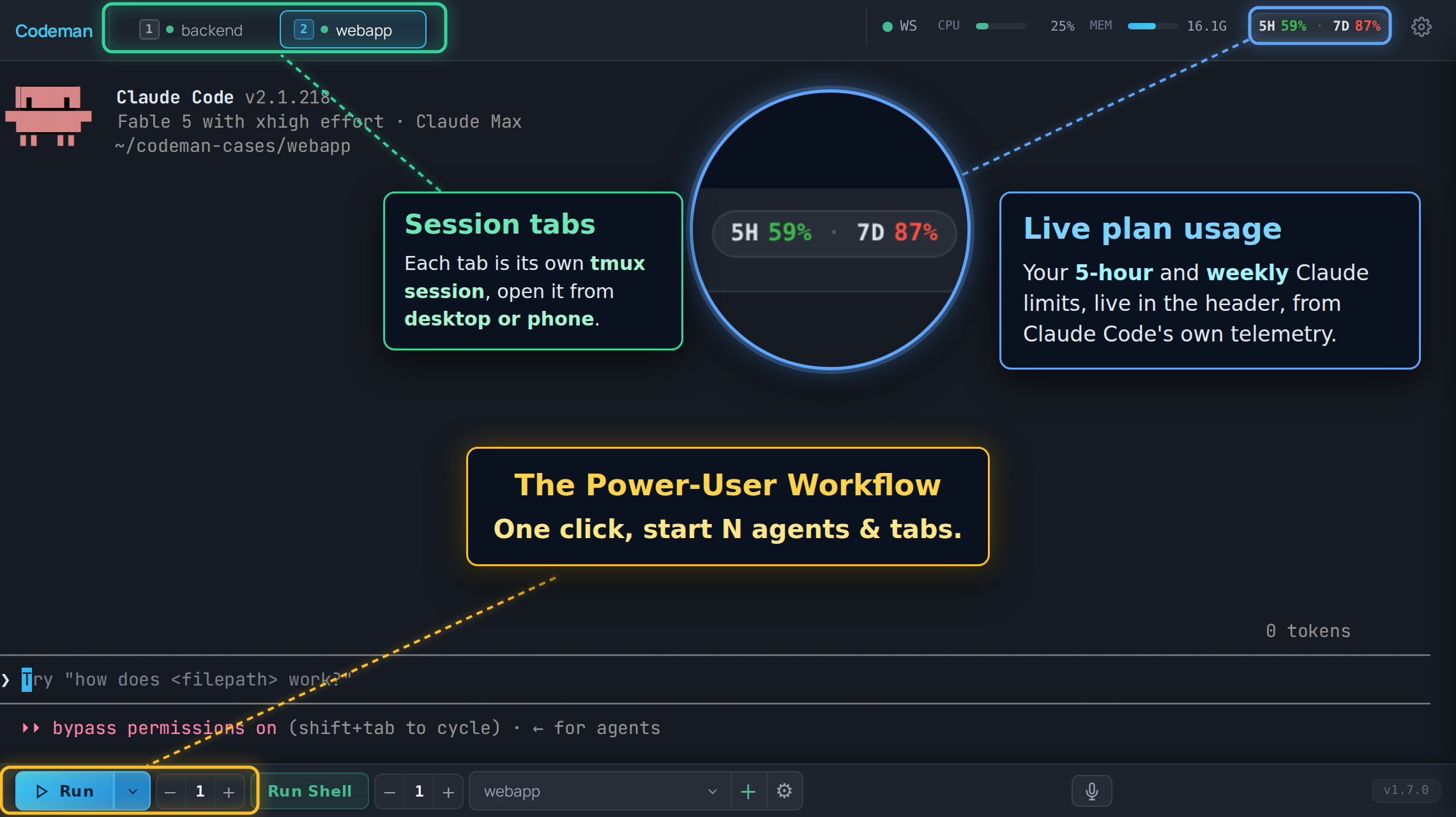
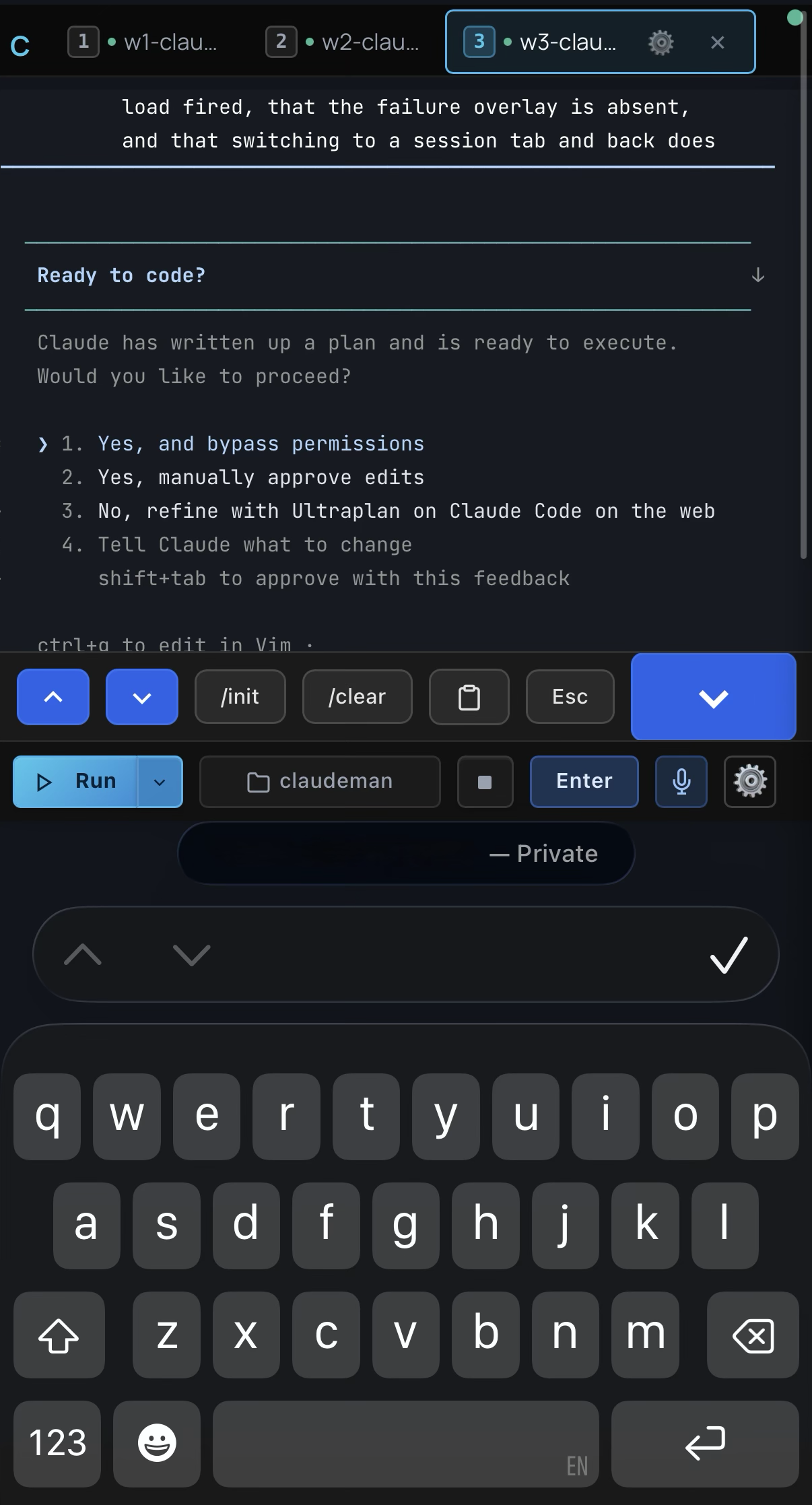
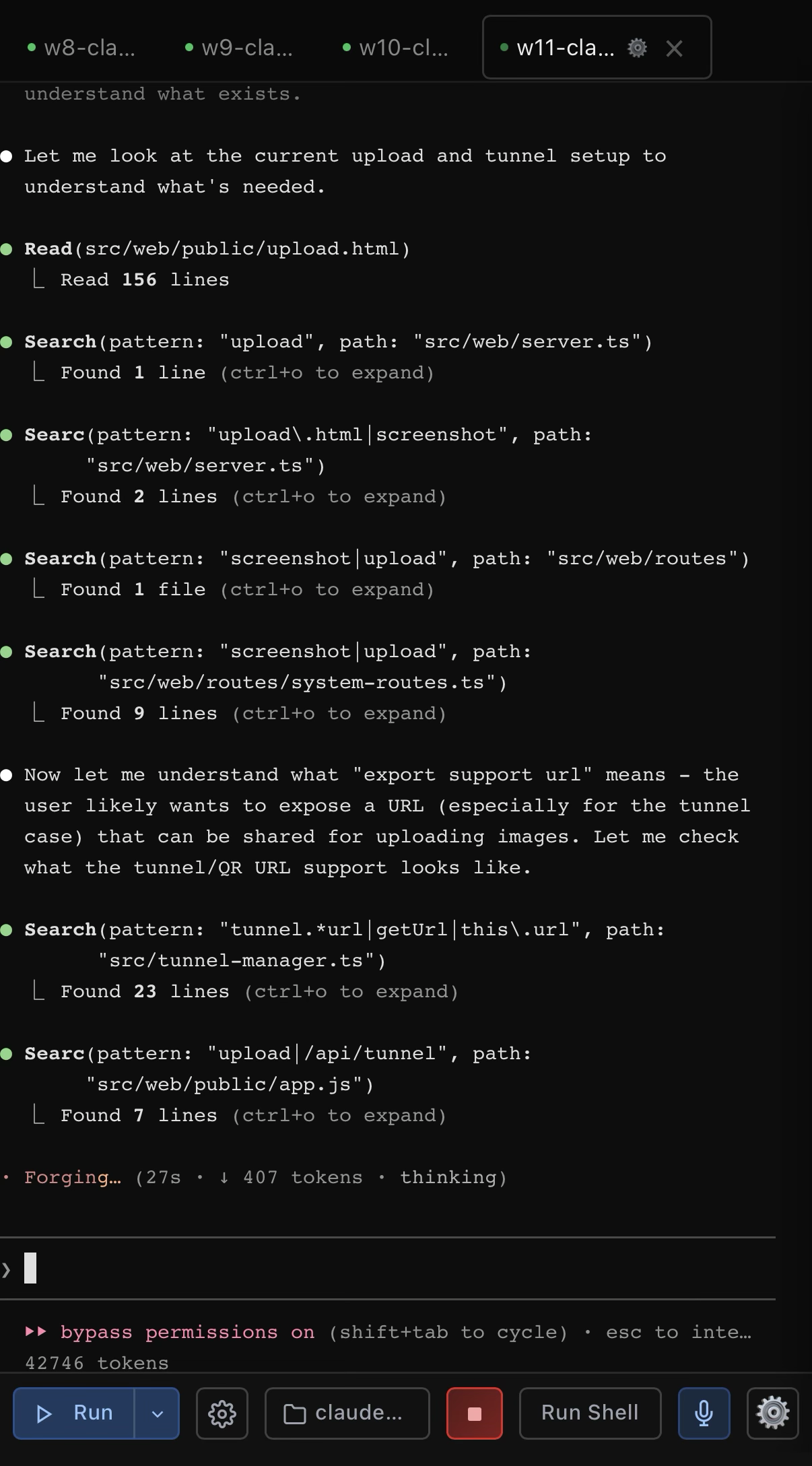
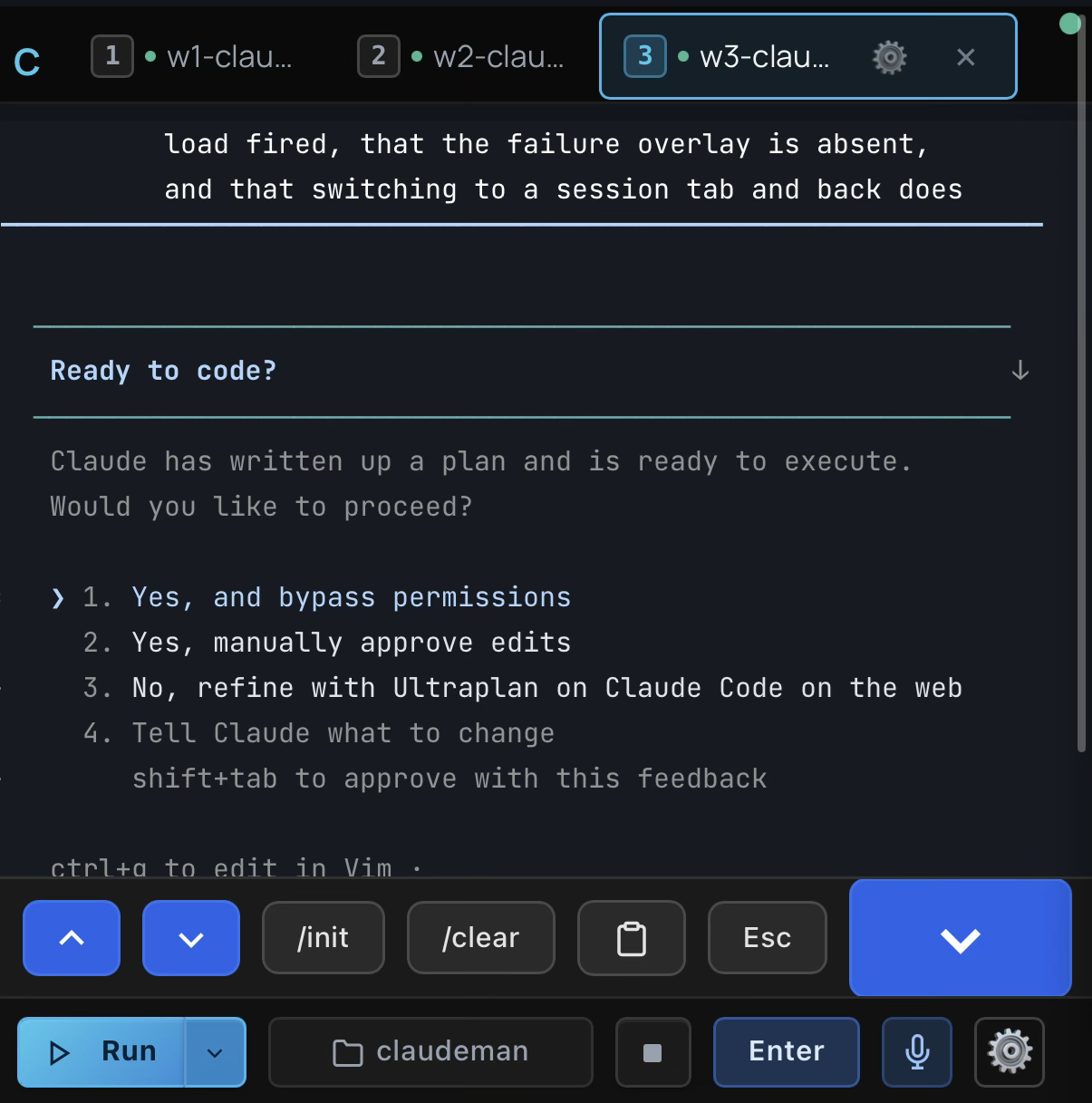
| Terminal Apps |
Codeman Mobile |
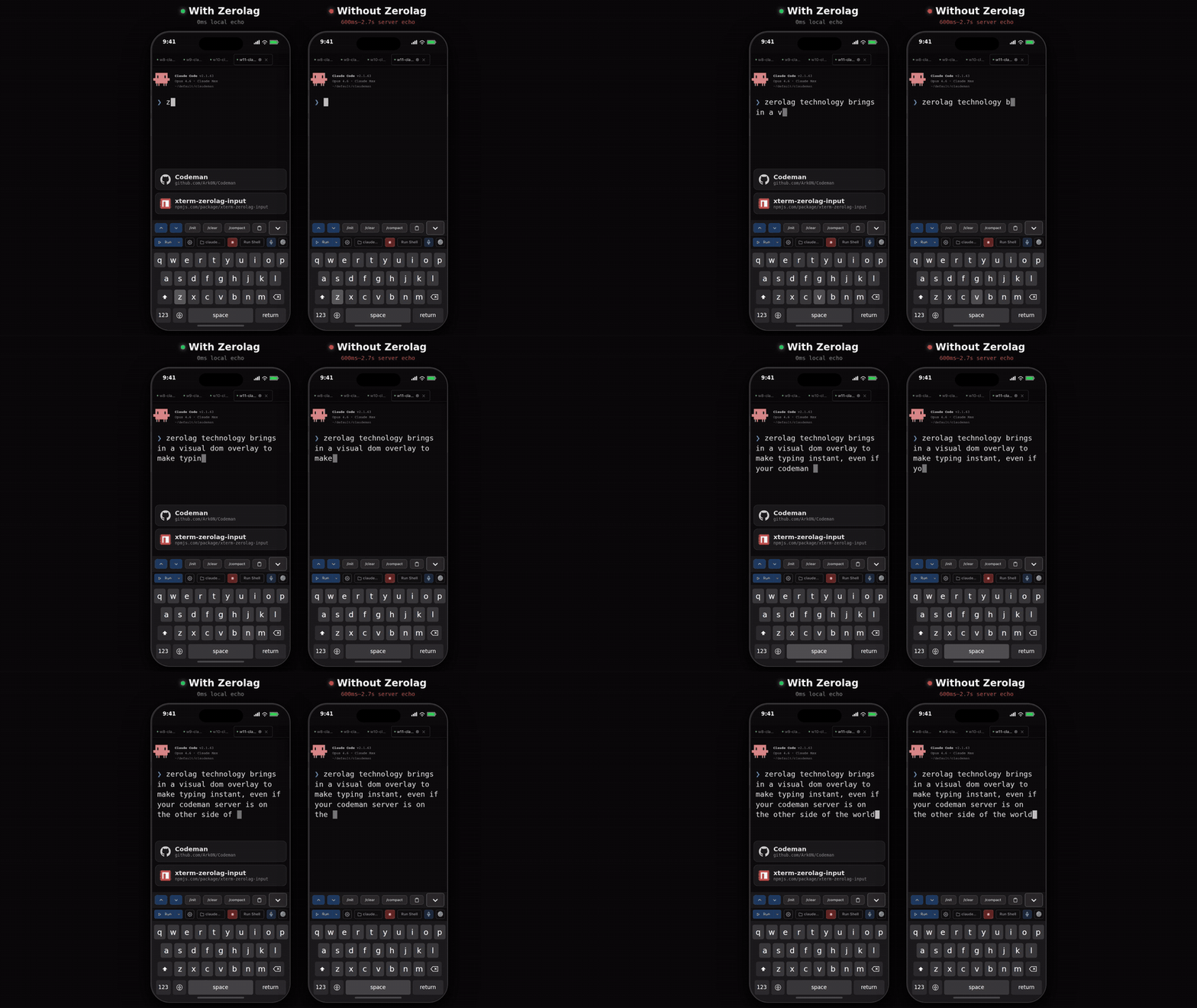
| 200-300ms input lag over remote | Local echo — instant feedback |
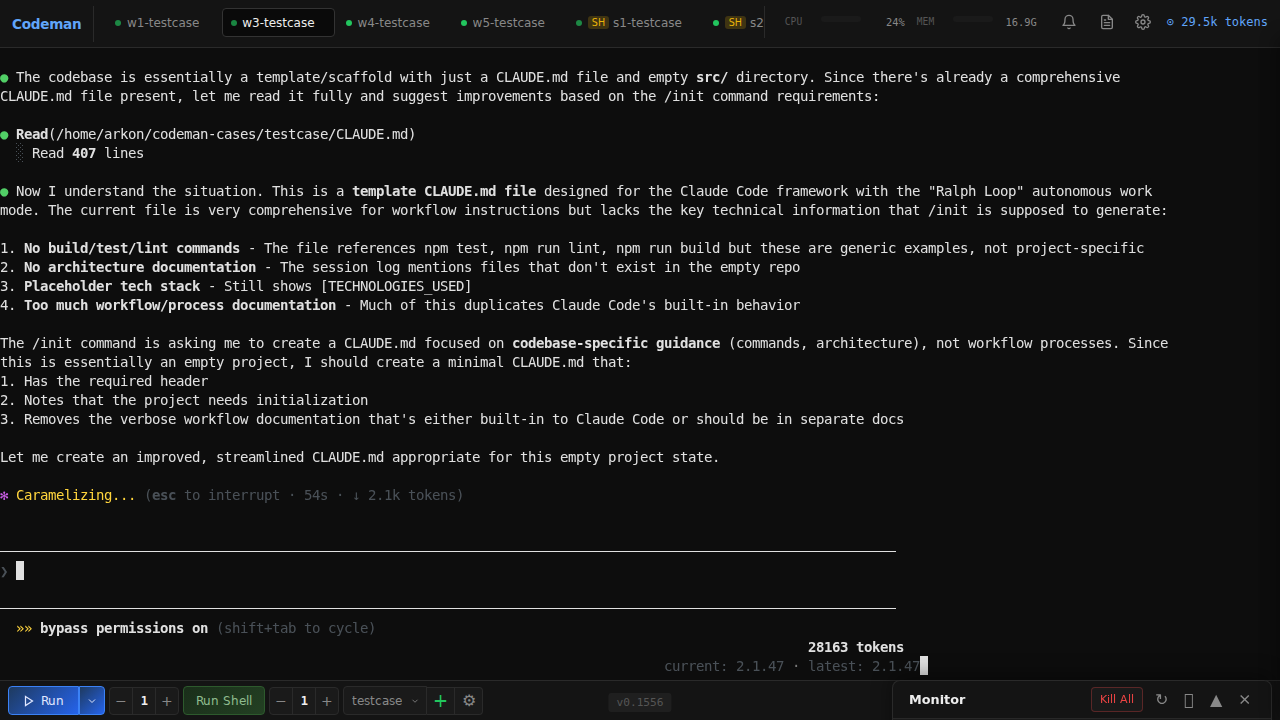
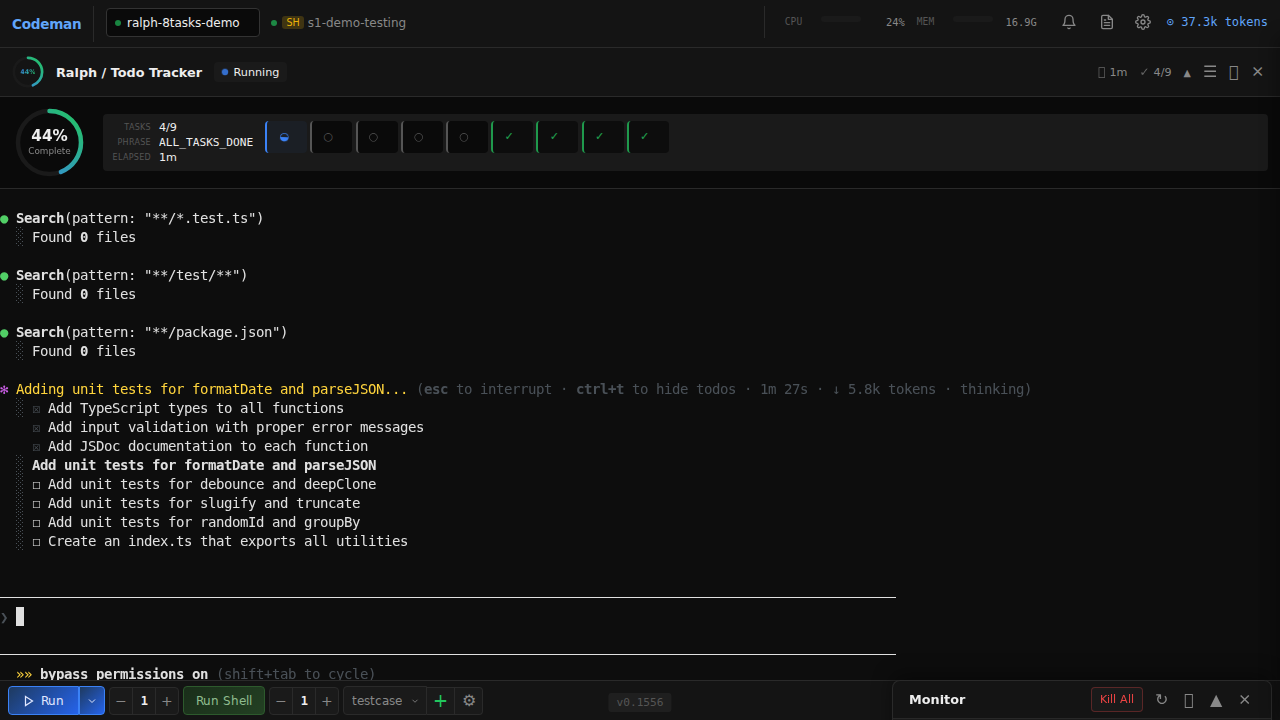
| Tiny text, no context | Full xterm.js terminal |
| No session management | Swipe between sessions |
| No notifications | Push alerts for approvals and idle |
| Manual reconnect | tmux persistence |
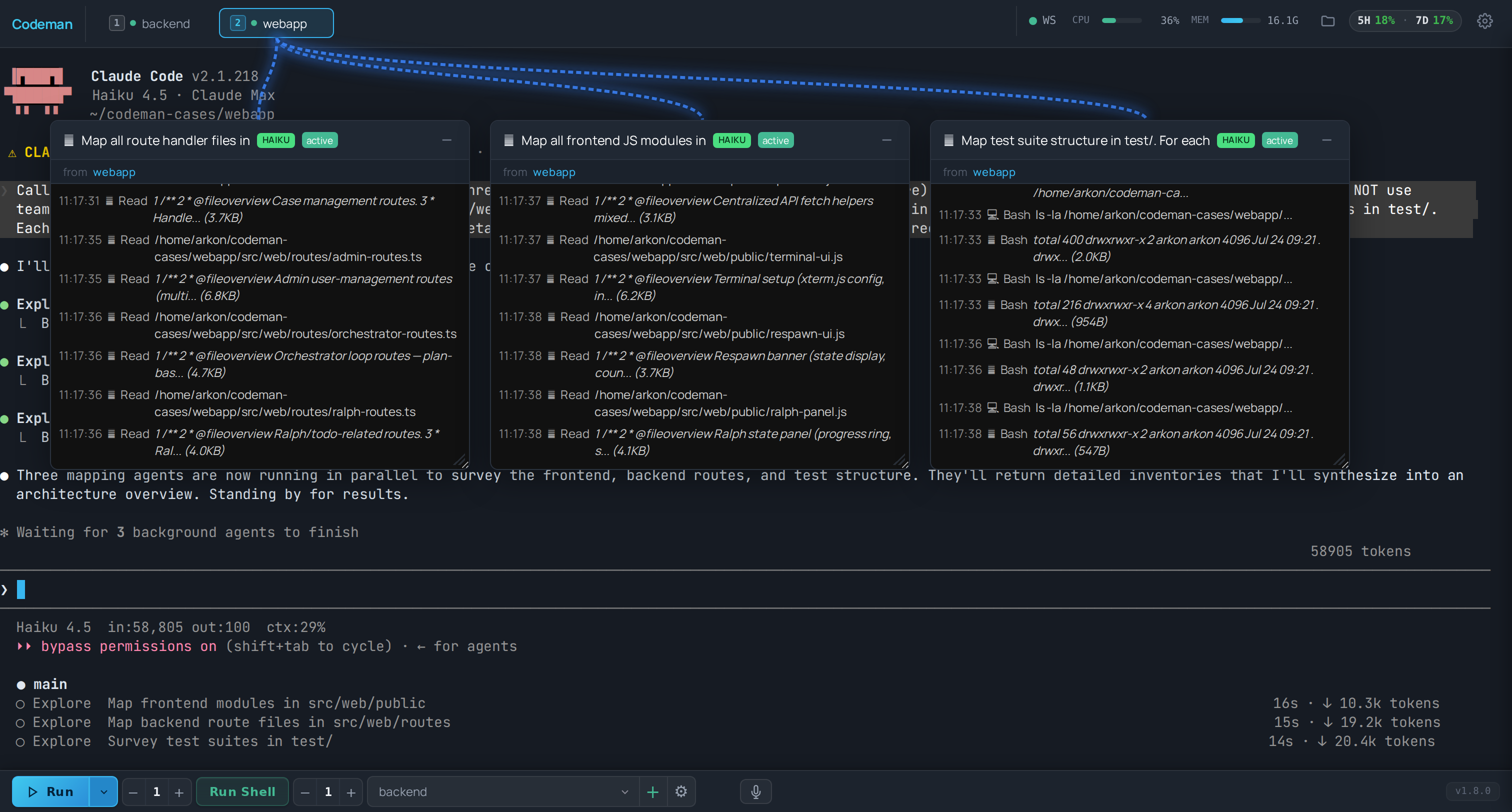
| No agent visibility | Background agents in real-time |
| Copy-paste slash commands | One-tap /init, /clear, /compact |
| Password typing on phone | QR code scan — instant auth |
### Secure QR Code Authentication
Typing passwords on a phone keyboard is miserable. Codeman replaces it with **cryptographically secure single-use QR tokens** — scan the code displayed on your desktop and your phone is authenticated instantly.
Each QR encodes a URL containing a 6-character short code that maps to a 256-bit secret (`crypto.randomBytes(32)`) on the server. Tokens auto-rotate every **60 seconds**, are **atomically consumed on first scan** (replays always fail), and use **hash-based `Map.get()` lookup** that leaks nothing through response timing. The short code is an opaque pointer — the real secret never appears in browser history, `Referer` headers, or Cloudflare edge logs.
The security design addresses all 6 critical QR auth flaws identified in ["Demystifying the (In)Security of QR Code-based Login"](https://www.usenix.org/conference/usenixsecurity25/presentation/zhang-xin) (USENIX Security 2025, which found 47 of the top-100 websites vulnerable): single-use enforcement, short TTL, cryptographic randomness, server-side generation, real-time desktop notification on scan (QRLjacking detection), and IP + User-Agent session binding with manual revocation. Dual-layer rate limiting (per-IP + global) makes brute force infeasible across 62^6 = 56.8 billion possible codes. Full security analysis: [`docs/qr-auth-plan.md`](docs/qr-auth-plan.md)
### Touch-Optimized Interface